-
Product Owner – Владелец продукта. Роль человека, который решает, какие фичи разрабатывать и как приоритизировать задачи. Как Pr…
Product Owner – Владелец продукта. Роль человека, который решает, какие фичи разрабатывать и как приоритизировать задачи. Как Product Owner управляет процессом создания и улучшения продукта, находя баланс между желаниями пользователей и техническими возможностями. #Продуктовыймененджмент #ИИМенеджмент #Маркетинг #Менеджмент #ИИМаркетинг →

-
-
Product Adoption Curve – Кривая внедрения продукта. Как продукт проходит путь от первых пользователей (ранних адоптеров) до масс…
Product Adoption Curve – Кривая внедрения продукта. Как продукт проходит путь от первых пользователей (ранних адоптеров) до массового рынка. Как правильно работать с каждым этапом внедрения, чтобы привлечь и удержать пользователей. #Продуктовыймененджмент #Менеджмент #ИИМаркетинг #Маркетинг #Продукт →

-
Инновации в производстве с Канонфарма
Производство генериков и инновационных препаратов для широкого использования. →
-
Platform Lock-in – Зависимость от платформы. Когда пользователь оказывается привязан к одной платформе из-за данных, подписок ил…
Platform Lock-in – Зависимость от платформы. Когда пользователь оказывается привязан к одной платформе из-за данных, подписок или интеграций, что затрудняет смену сервиса. Как использовать стратегию lock-in для повышения удержания и создания барьеров для конкурентов. #Менеджмент #ИИМенеджмент #Продуктовыймененджмент #Маркетинг #Продукт →

-
Йодосодержащие препараты от Йодные технологии
Производство препаратов с йодом для различных медицинских целей. →
-
Empowering Time Series AI: How Salesforce is Leveraging Synthetic Data to Enhance Foundation Models
Empowering Time Series AI: How Salesforce is Leveraging Synthetic Data to Enhance Foundation Models Time series analysis faces significant hurdles in data availability, quality, and diversity, critical factors in developing effective foundation models. Real-world datasets often fall short due to regulatory limitations, inherent biases, poor quality, and limited paired textual annotations, making it difficult to… →
-
A Step by Step Guide to Solve 1D Burgers’ Equation with Physics-Informed Neural Networks (PINNs): A PyTorch Approach Using Autom…
A Step by Step Guide to Solve 1D Burgers’ Equation with Physics-Informed Neural Networks (PINNs): A PyTorch Approach Using Automatic Differentiation and Collocation Methods In this tutorial, we explore an innovative approach that blends with physical laws by leveraging Physics-Informed Neural Networks (PINNs) to solve the one-dimensional Burgers’ equation. Using PyTorch on Google Colab, we… →
-
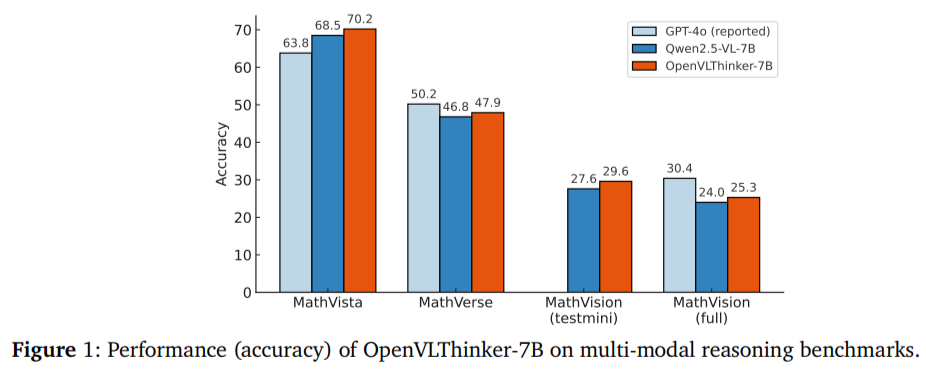
UCLA Researchers Released OpenVLThinker-7B: A Reinforcement Learning Driven Model for Enhancing Complex Visual Reasoning and Ste…
UCLA Researchers Released OpenVLThinker-7B: A Reinforcement Learning Driven Model for Enhancing Complex Visual Reasoning and Step-by-Step Problem Solving in Multimodal Systems Large vision-language models (LVLMs) integrate large language models with image processing capabilities, enabling them to interpret images and generate coherent textual responses. While they excel at recognizing visual objects and responding to prompts, they… →
-
Pivot – Разворот в бизнесе. Когда бизнес меняет направление или стратегию, потому что изначальная идея не оказалась успешной. Ка…
Pivot – Разворот в бизнесе. Когда бизнес меняет направление или стратегию, потому что изначальная идея не оказалась успешной. Как правильно провести pivot, чтобы не потерять время и ресурсы, а найти новую успешную нишу. #ИИ #ИИМаркетинг #Маркетинг #Менеджмент #Продуктовыймененджмент →
