-
Technical debt – Технический долг. Когда разработка продукта ускоряется за счёт качества кода, что приводит к необходимости его …
Technical debt – Технический долг. Когда разработка продукта ускоряется за счёт качества кода, что приводит к необходимости его доработки в будущем. Как избежать накопления технического долга и почему важно учитывать его при планировании. #ИИ #Менеджмент #Продукт #ИИМаркетинг #Продуктовыймененджмент →

-
VideoMind: A Role-Based Agent for Temporal-Grounded Video Understanding
VideoMind: A Role-Based Agent for Temporal-Grounded Video Understanding LLMs have shown impressive capabilities in reasoning tasks like Chain-of-Thought (CoT), enhancing accuracy and interpretability in complex problem-solving. While researchers are extending these capabilities to multi-modal domains, videos present unique challenges due to their temporal dimension. Unlike static images, videos require understanding dynamic interactions over time. Current… →

-
-
TAM (Total Addressable Market) – Общий доступный рынок. Это весь рынок, который может быть заинтересован в продукте, если бы не …
TAM (Total Addressable Market) – Общий доступный рынок. Это весь рынок, который может быть заинтересован в продукте, если бы не было ограничений. Как определение TAM помогает строить стратегии роста и масштабирования. #ИИМаркетинг #Продукт #ИИ #Менеджмент #ИИМенеджмент →

-
Meet Hostinger Horizons: A No-Code AI Tool that Lets You Create, Edit, and Publish Custom Web Apps Without Writing a Single Line…
Meet Hostinger Horizons: A No-Code AI Tool that Lets You Create, Edit, and Publish Custom Web Apps Without Writing a Single Line of Code In the evolving landscape of web development, the emergence of no-code platforms has significantly broadened access to application creation. Among these, stands out as an AI-powered tool designed to facilitate the… →

-
Cold Calling Playbook Tips: 10 Proven Tactics for Sales Leaders and Reps
Hello and welcome to The GTM Newsletter by GTMnow – read by 50,000+ to scale their companies and careers. GTMnow shares insight around the go-to-market strategies responsible for explosive company growth. GTMnow highlights the strategies, along with the stories from the top 1% of GTM executives, VCs, and founders behind these strategies and companies. GTMfund… →

-
Google DeepMind vs NVIDIA AI: Product Manager’s Guide to Cross-Industry AI Innovation
Google DeepMind focuses on solving complex problems across various domains including healthcare energy and manufacturing Through advanced machine learning algorithms it optimizes supply chains and resource usage reducing operational costs by 10-20% In sectors like logistics DeepMind’s predictive analytics improve decision-making leading to enhanced profitability Its cross-industry applications make it a versatile tool for businesses… →

-
Биотехнологические решения от Нанолек
Разработка и производство биотехнологических препаратов. →
-
SOM (Serviceable Obtainable Market) – Достижимый рынок. Это часть SAM, которая доступна для захвата с текущими ресурсами. Как со…
SOM (Serviceable Obtainable Market) – Достижимый рынок. Это часть SAM, которая доступна для захвата с текущими ресурсами. Как сосредоточиться на реальных возможностях с учётом текущих стратегий и ограничений бизнеса. #ИИМаркетинг #ИИМенеджмент #Маркетинг #Продукт #Менеджмент →

-
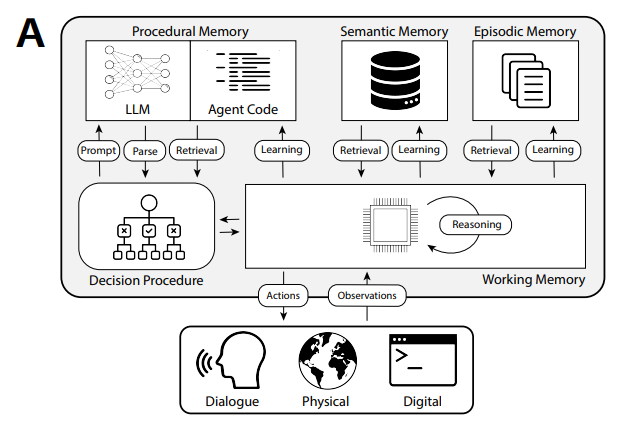
Understanding AI Agent Memory: Building Blocks for Intelligent Systems
Understanding AI Agent Memory: Building Blocks for Intelligent Systems AI agent memory comprises multiple layers, each serving a distinct role in shaping the agent’s behavior and decision-making. By dividing memory into different types, it is better to understand and design AI systems that are both contextually aware and responsive. Let’s explore the four key types… →