-
A Coding Guide to Build an Autonomous Agentic AI for Time Series Forecasting with Darts and Hugging Face
«`html A Coding Guide to Build an Autonomous Agentic AI for Time Series Forecasting with Darts and Hugging Face In this tutorial, we build an advanced agentic AI system that autonomously handles time series forecasting using the Darts library combined with a lightweight Hugging Face model for reasoning. We design the agent to operate in… →
-
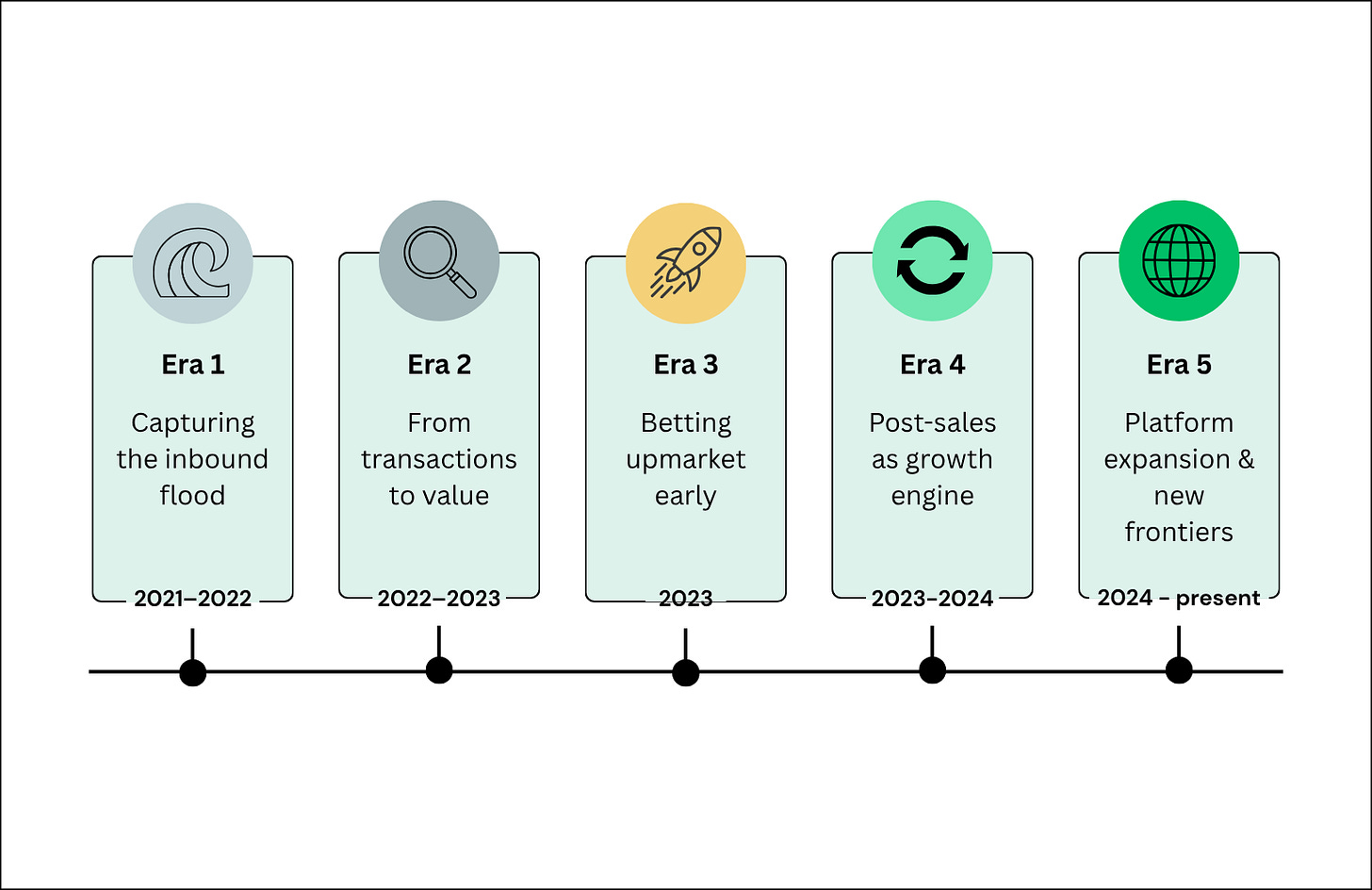
Deconstructing Vanta’s GTM: A Journey Through Five Eras of Growth
Hello and welcome to The GTMnow Newsletter – the media brand of VC firm, GTMfund. Build, scale and invest with the best minds in tech. This is Part II of a series on Deconstructing GTM. You can find Part I here, deconstructing ClickUp’s evolution from a PLG tool to a $4B enterprise company. In the… →
-
AWS Open-Sources an MCP Server for Bedrock AgentCore to Streamline AI Agent Development
«`html Understanding the Target Audience The target audience for the AWS Open-Sourced Model Context Protocol (MCP) Server includes software developers and data scientists focused on AI agent development. These professionals aim to streamline their development processes and improve the efficiency of their workflows. Pain Points: Complexity in deploying AI agents due to cloud-specific knowledge requirements.… →
-
Cost-Utility Analysis of Accelerated and Standard Strategies for Renal Replacement Therapy Initiation
CONCLUSIONS AND RELEVANCE: The findings of this economic evaluation suggest that standard KRT initiation may be cost-effective in a Canadian setting, but this finding was sensitive to postdischarge cost trajectories and regional variation in KRT dependence. →

-
Comparison of the efficacy of radial and focused extracorporeal shock-wave therapy (ESWT) in myofascial pain syndrome: a randomized, sham-controlled study
Myofascial pain syndrome (MPS) is one of the most common pain syndromes characterized by painful trigger points. Active trigger points may cause spontaneous pain, reduce quality of life, and result in workforce loss. Extracorporeal shock-wave therapy (ESWT), using radial or focused acoustic waves created outside the body, is a treatment method used for musculoskeletal problems.… →

-
Effects of Training Modalities and Additional Pain Education on Exercise-Induced Hypoalgesia in People With Osteoarthritis of the Knee: A Randomised Controlled Feasibility Trial
CONCLUSION: Progression to a larger study is warranted. RTL, but also AET and RTU may induce EIH in people with knee OA. Pain education might have a useful supporting function, but its effect would need to be determined in a study design using a control group that receives training and no education. →

-
Impact of mean arterial pressure on reproductive endocrine characteristics in infertile patients with polycystic ovary syndrome: a secondary analysis of a randomized clinical trial
CONCLUSION: Elevated MAP is associated with dysregulation of glucose and lipid metabolism and alterations in endocrine hormone levels. It may thus serve as a promising screening approach for IR-related conditions in patients with PCOS. →

-
Microsoft Releases ‘Microsoft Agent Framework’: An Open-Source SDK and Runtime that Simplifies the Orchestration of Multi-Agent Systems
«`html Microsoft Releases ‘Microsoft Agent Framework’: An Open-Source SDK and Runtime that Simplifies the Orchestration of Multi-Agent Systems Target Audience Analysis The target audience for the Microsoft Agent Framework includes software developers, data scientists, and business managers involved in AI and multi-agent system development. Their pain points often revolve around the complexity of integrating various… →
-
Evaluation of Patient-reported Outcome Measures during the Correction of Skeletal Class III Malocclusion with Maxillary Constriction in Early Adolescence
CONCLUSION: Treatment of class III malocclusion in growing patients by both appliances did not negatively affect PROMs. Moreover, the application of both appliances was associated with a gradual improvement in the levels of pain and functional impairments until they were almost nonexistent after 6 months. →

-
Safety and efficacy of a dexamethasone-sparing regimen with daratumumab and lenalidomide in patients with frailty and newly diagnosed multiple myeloma (IFM2017-03): a phase 3, open-label, multicentre, randomised, controlled trial
BACKGROUND: Patients with frailty and newly diagnosed multiple myeloma have worse outcomes due to higher rates of adverse events (AEs) and treatment discontinuation. This study evaluated a dexamethasone-sparing regimen of daratumumab plus lenalidomide versus lenalidomide plus dexamethasone in frail patients with newly diagnosed multiple myeloma. →