AI News
Category Added in a WPeMatico Campaign
-
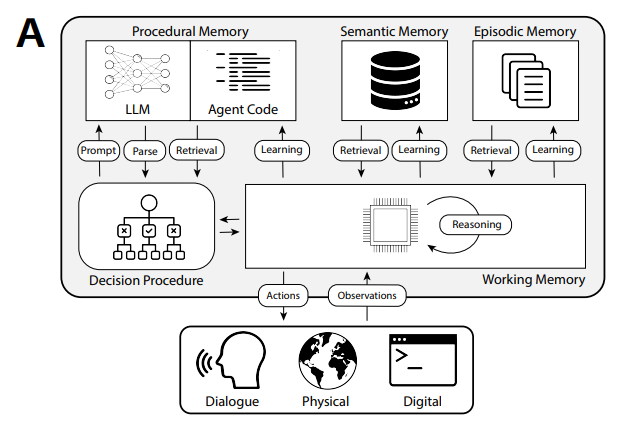
Understanding AI Agent Memory: Building Blocks for Intelligent Systems
Understanding AI Agent Memory: Building Blocks for Intelligent Systems AI agent memory comprises multiple layers, each serving a distinct role in shaping the agent’s behavior and decision-making. By dividing memory into different types, it is better to understand and design AI systems that are both contextually aware and responsive. Let’s explore the four key types…
-

Tencent AI Researchers Introduce Hunyuan-T1: A Mamba-Powered Ultra-Large Language Model Redefining Deep Reasoning, Contextual Ef…
Tencent AI Researchers Introduce Hunyuan-T1: A Mamba-Powered Ultra-Large Language Model Redefining Deep Reasoning, Contextual Efficiency, and Human-Centric Reinforcement Learning Large language models struggle to process and reason over lengthy, complex texts without losing essential context. Traditional models often suffer from context loss, inefficient handling of long-range dependencies, and difficulties aligning with human preferences, affecting the…
-
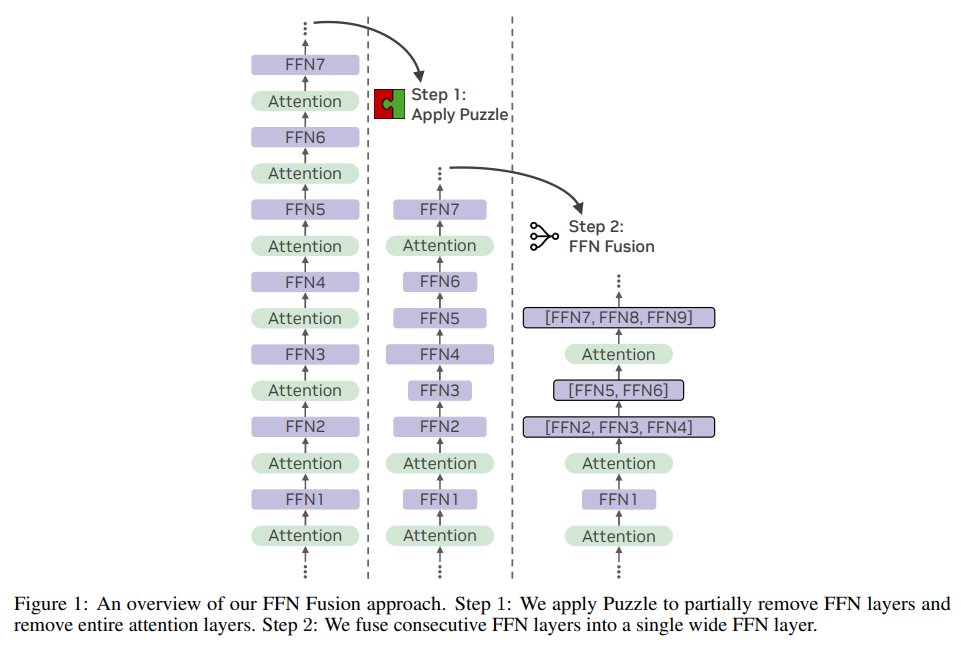
NVIDIA AI Researchers Introduce FFN Fusion: A Novel Optimization Technique that Demonstrates How Sequential Computation in Large…
NVIDIA AI Researchers Introduce FFN Fusion: A Novel Optimization Technique that Demonstrates How Sequential Computation in Large Language Models LLMs can be Effectively Parallelized Large language models (LLMs) have become vital across domains, enabling high-performance applications such as natural language generation, scientific research, and conversational agents. Underneath these advancements lies the transformer architecture, where alternating…
-
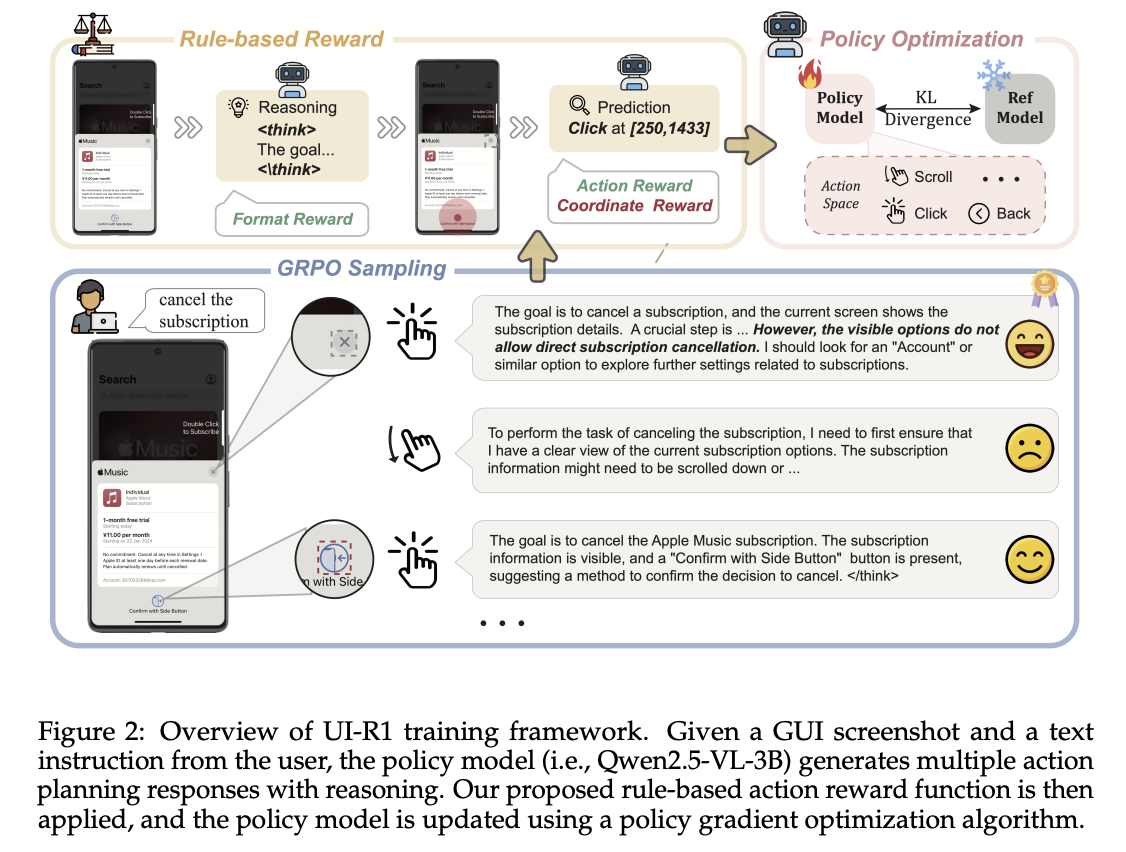
This AI Paper Propose the UI-R1 Framework that Extends Rule-based Reinforcement Learning to GUI Action Prediction Tasks…
This AI Paper Propose the UI-R1 Framework that Extends Rule-based Reinforcement Learning to GUI Action Prediction Tasks Supervised fine-tuning (SFT) is the standard training paradigm for large language models (LLMs) and graphic user interface (GUI) agents. However, SFT demands high-quality labeled datasets, resulting in extended training periods and high computational expenses. This dependence on extensive…
-
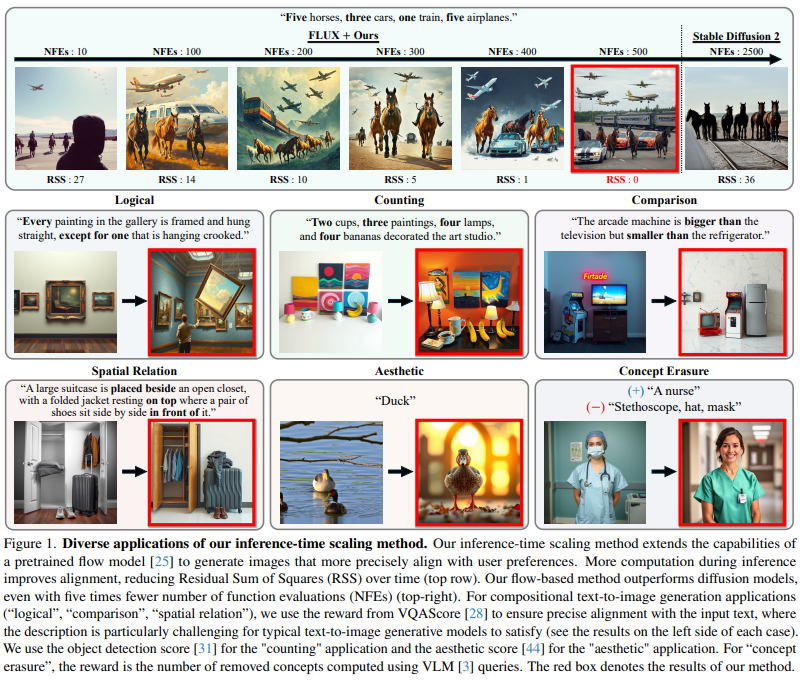
Efficient Inference-Time Scaling for Flow Models: Enhancing Sampling Diversity and Compute Allocation…
Efficient Inference-Time Scaling for Flow Models: Enhancing Sampling Diversity and Compute Allocation Recent advancements in AI scaling laws have shifted from merely increasing model size and training data to optimizing inference-time computation. This approach, exemplified by models like OpenAI o1 and DeepSeek R1, enhances model performance by leveraging additional computational resources during inference. Test-time budget…
-
Empowering Time Series AI: How Salesforce is Leveraging Synthetic Data to Enhance Foundation Models
Empowering Time Series AI: How Salesforce is Leveraging Synthetic Data to Enhance Foundation Models Time series analysis faces significant hurdles in data availability, quality, and diversity, critical factors in developing effective foundation models. Real-world datasets often fall short due to regulatory limitations, inherent biases, poor quality, and limited paired textual annotations, making it difficult to…
-
A Step by Step Guide to Solve 1D Burgers’ Equation with Physics-Informed Neural Networks (PINNs): A PyTorch Approach Using Autom…
A Step by Step Guide to Solve 1D Burgers’ Equation with Physics-Informed Neural Networks (PINNs): A PyTorch Approach Using Automatic Differentiation and Collocation Methods In this tutorial, we explore an innovative approach that blends with physical laws by leveraging Physics-Informed Neural Networks (PINNs) to solve the one-dimensional Burgers’ equation. Using PyTorch on Google Colab, we…
-
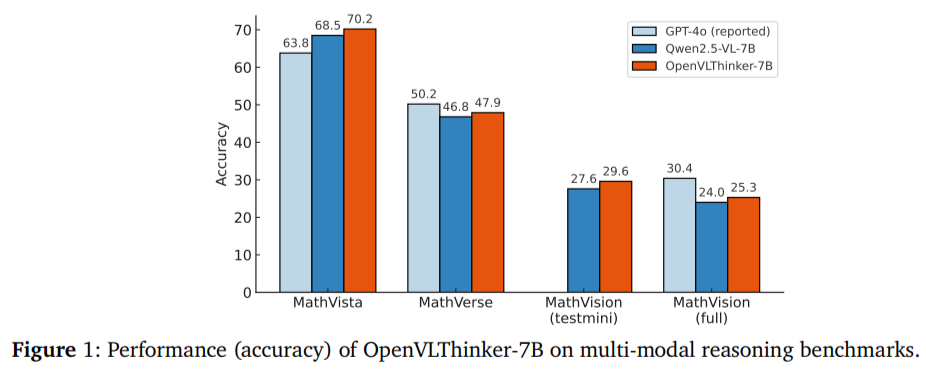
UCLA Researchers Released OpenVLThinker-7B: A Reinforcement Learning Driven Model for Enhancing Complex Visual Reasoning and Ste…
UCLA Researchers Released OpenVLThinker-7B: A Reinforcement Learning Driven Model for Enhancing Complex Visual Reasoning and Step-by-Step Problem Solving in Multimodal Systems Large vision-language models (LVLMs) integrate large language models with image processing capabilities, enabling them to interpret images and generate coherent textual responses. While they excel at recognizing visual objects and responding to prompts, they…
-

Tutorial to Create a Data Science Agent: A Code Implementation using gemini-2.0-flash-lite model through Google API, google.gene…
Tutorial to Create a Data Science Agent: A Code Implementation using gemini-2.0-flash-lite model through Google API, google.generativeai, Pandas and IPython.display for Interactive Data Analysis In this tutorial, we demonstrate the integration of Python’s robust data manipulation library Pandas with Google Cloud’s advanced generative capabilities through the ativeai package and the Gemini Pro model. By setting…
-
Meta Reality Labs Research Introduces Sonata: Advancing Self-Supervised Representation Learning for 3D Point Clouds…
Meta Reality Labs Research Introduces Sonata: Advancing Self-Supervised Representation Learning for 3D Point Clouds 3D self-supervised learning (SSL) has faced persistent challenges in developing semantically meaningful point representations suitable for diverse applications with minimal supervision. Despite substantial progress in image-based SSL, existing point cloud SSL methods have largely been limited due to the issue known…