-
ViSMaP: Unsupervised Summarization of Hour-Long Videos Using Meta-Prompting and Short-Form Datasets
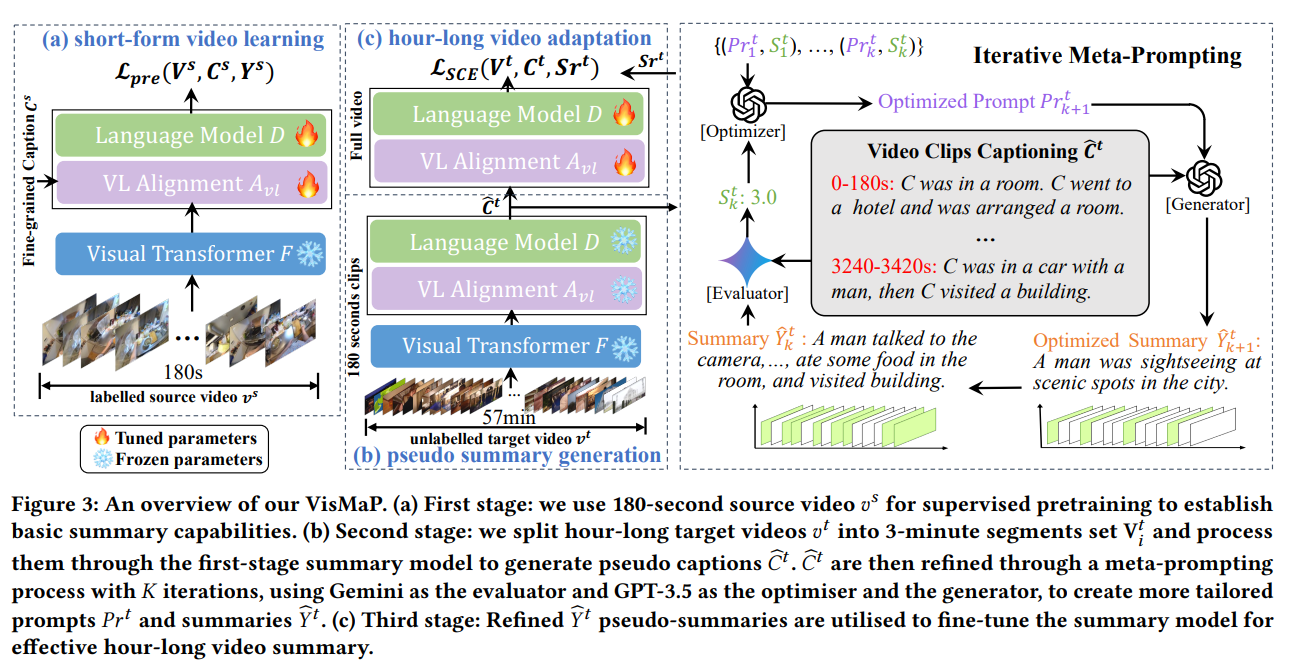
ViSMaP: Unsupervised Summarization of Hour-Long Videos Using Meta-Prompting and Short-Form Datasets Video captioning models are typically trained on datasets consisting of short videos, usually under three minutes in length, paired with corresponding captions. While this enables them to describe basic actions like walking or talking, these models struggle with the complexity of long-form videos, such… →
-
Effects of 12-Week Anti-Inflammatory Dietary Education on Depressive Symptoms Among Depressed Patients with Breast Cancer Undergoing Adjuvant Chemotherapy: A Randomized Controlled Trial
Background: Depressive symptoms (DepS) are prevalent among patients with breast cancer. Offering an anti-inflammatory diet is a promising strategy for DepS management, but it is costly and difficult to scale up. Instead, anti-inflammatory dietary education is cost-effective and may be more conducive to the promotion of an anti-inflammatory diet strategy. Methods: A prospective, assessor-blinded, two-arm… →

-
NormalCrafter: Learning Temporally Consistent Normals from Video Diffusion Priors
NormalCrafter introduces a novel approach for surface normal estimation in videos, leveraging diffusion priors to achieve high spatial fidelity and temporal consistency over arbitrary-length sequences. Key Highlights: Video Diffusion Model Repurposing – Adapts Stable Video Diffusion (SVD) for normal map prediction, maintaining temporal structure instead of RGB generation. Semantic Feature Regularization (SFR) – Aligns intermediate… →
-
Feasibility and acceptability of the Comprehensive Oncology Rehabilitation and Exercise (CORE) clinical workflow algorithm in patients with newly diagnosed stage I-III breast cancer who undergo surgery as first-line treatment
CONCLUSIONS: The CORE clinical workflow algorithm is feasible and acceptable among women who have newly diagnosed stage I-III breast cancer with plans for surgery as first-line treatment. CORE was also acceptable among clinic staff. →

-
Cold Therapy For Recovery: A Fast Track To Healing
Cold Therapy For Recovery: A Fast Track To Healing Cold therapy for recovery is a game-changer. It& one of the most effective ways to speed up healing after an injury or intense workout. I’ve used it myself, and it works wonders for reducing pain and inflammation. Let’s dive into how cold therapy helps speed up… →

-
Improved overall survival in an anti-PD-L1 treated cohort of newly diagnosed glioblastoma patients is associated with distinct immune, mutation, and gut microbiome features: a single arm prospective phase I/II trial
This phase I/II trial aims to evaluate the efficacy of concurrent atezolizumab with radiation therapy and temozolomide (TMZ) followed by adjuvant atezolizumab and TMZ in newly diagnosed glioblastoma (GBM) patients and to identify pre-treatment correlates with outcome (N = 60). Trial number: NCT03174197. The primary outcome was overall survival (OS) whereas secondary outcomes were retrospective… →

-
Enteric-coated Mycophenolate Sodium plus hydroxychloroquine therApy versus hydroxychloroquine for the Remission of Proteinuria in IgA Nephropathy (EMSAR-IgAN trial): study protocol for a randomised trial
INTRODUCTION: The management of immunoglobulin A (IgA) nephropathy remains a topic of debate. Hydroxychloroquine and mycophenolate mofetil (MMF) are two immunosuppressive agents that have recently garnered increased attention among patients with IgA nephropathy in China. Several studies have shown the comparable efficacy between MMF and enteric-coated mycophenolate sodium (EC-MPS), with lower adverse event rates for… →

-
A Coding Tutorial of Model Context Protocol Focusing on Semantic Chunking, Dynamic Token Management, and Context Relevance Scori…
A Coding Tutorial of Model Context Protocol Focusing on Semantic Chunking, Dynamic Token Management, and Context Relevance Scoring for Efficient LLM Interactions Managing context effectively is a critical challenge when working with large language models, especially in environments like Google Colab, where resource constraints and long documents can quickly exceed available token windows. In this… →
