-
Disease-Modifying, Neuroprotective Effect of N-Acetyl-l-Leucine in Adult and Pediatric Patients With Niemann-Pick Disease Type C
BACKGROUND AND OBJECTIVES: N-acetyl-l-leucine (NALL) has been established to improve the neurologic manifestations of Niemann-Pick disease type C (NPC) after 12 weeks in a placebo-controlled trial. In the open-label extension phase (EP) follow-up, data were obtained after 12 and 18 months to evaluate the long-term effects of NALL for NPC. →

-
The effects of multimodal cocktail analgesic local injection in postoperative pain control after laminoplasty: A study protocol of a prospective randomized controlled trial
BACKGROUND: Laminoplasty is the most widely used surgical technique for cervical spondylotic myelopathy. This surgery can cause severe postoperative pain; if not controlled, recovery or rehabilitation may be delayed. Therefore, effective control of postoperative pain is crucial. This randomized prospective study aims to evaluate the effects of a multimodal cocktail injection on postoperative pain and… →

-
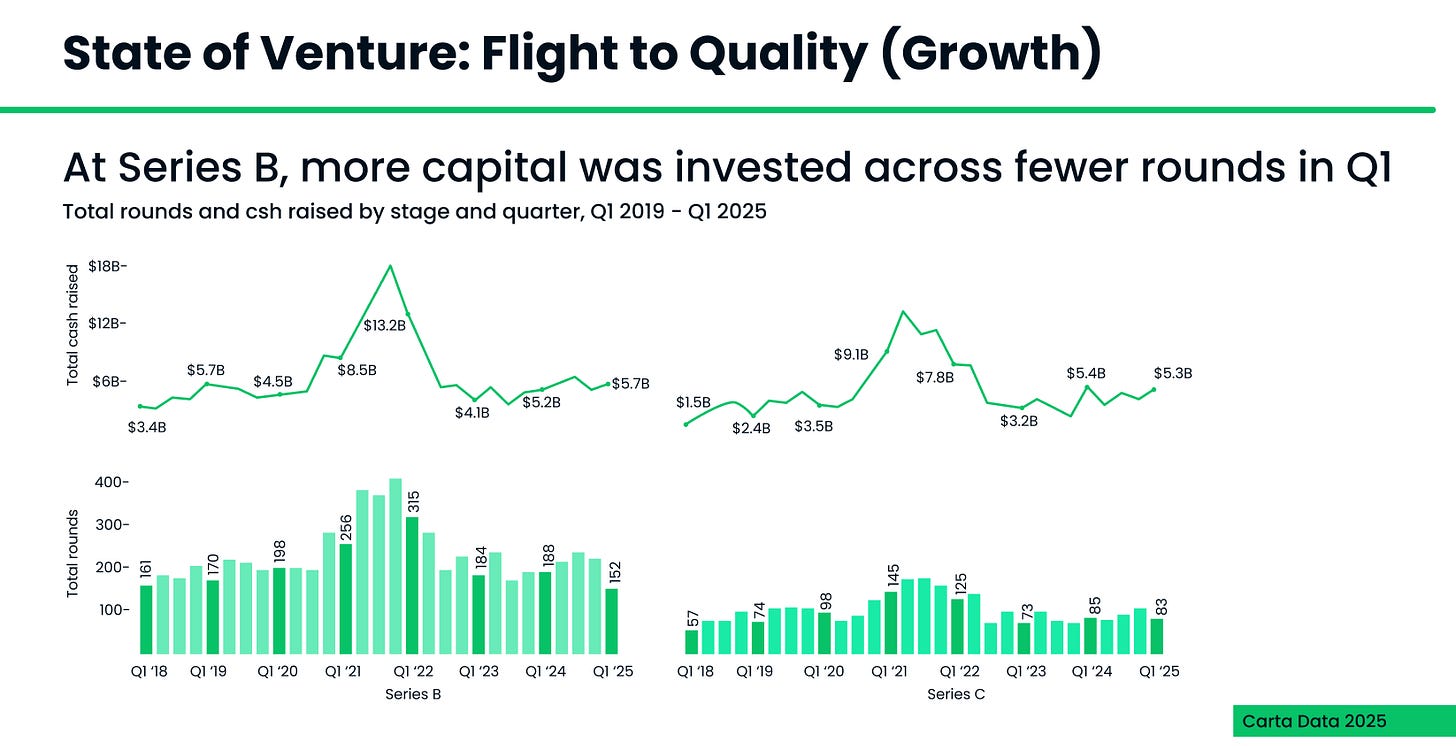
The State of Venture in 2025
Hello and welcome to The GTM Newsletter by GTMnow – read by 50,000+ to scale their companies and careers. GTMnow shares insight around the go-to-market strategies responsible for explosive company growth. GTMnow highlights the strategies, along with the stories from the top 1% of GTM executives, VCs, and founders behind these strategies and companies. In… →
-
Efficacy and Safety of Hormone Replacement Combined With Escitalopram in the Treatment of Chronic Insomnia in Perimenopausal Women: A Randomized Controlled Trial
CONCLUSION: Femoston plus escitalopram improves chronic insomnia in perimenopausal women. Serum levels of 5-HT, E2, FSH, and LH may objectively indicate the clinical severity of chronic insomnia in this population. →

-
Efficacy of Power Training on Sarcopenic Obesity in Community-Dwelling Older Women: A 32-Week Randomized Clinical Trial
Background/Objectives: Exercise is a key nonpharmacological strategy for the management of sarcopenic obesity (SO), characterized by low muscle mass and excess fat. However, long-term interventions and specific modalities, such as power training (PT), remain unexplored in this population. Methods: In this 32-week randomized controlled trial, 40 community-dwelling women (mean age: 77.0 ± 6.8 years) with… →

-
Build a Secure AI Code Execution Workflow Using Daytona SDK
Build a Secure AI Code Execution Workflow Using Daytona SDK Build a Secure AI Code Execution Workflow Using Daytona SDK Understanding the Target Audience The target audience for the Daytona SDK tutorial includes software developers, data scientists, and machine learning engineers who are interested in securely executing AI-generated code. Their primary goals are to: Ensure… →
-
Apple Researchers Reveal Structural Failures in Large Reasoning Models Using Puzzle-Based Evaluation
«`html Apple Researchers Reveal Structural Failures in Large Reasoning Models Using Puzzle-Based Evaluation Artificial intelligence has evolved from basic language models to advanced systems known as Large Reasoning Models (LRMs). These tools aim to simulate human-like thinking by generating intermediate reasoning steps before arriving at conclusions. This transition has raised critical questions about how these… →
-
Google AI Unveils a Hybrid AI-Physics Model for Accurate Regional Climate Risk Forecasts with Better Uncertainty Assessment
«`html Google AI Unveils a Hybrid AI-Physics Model for Accurate Regional Climate Risk Forecasts with Better Uncertainty Assessment Understanding the Target Audience The target audience for this article includes climate scientists, business leaders in agriculture and water resource management, policymakers, and technology enthusiasts interested in AI applications. Their pain points revolve around the limitations of… →
-
AI Explainability: How to Avoid Rubber-Stamping Recommendations
For the fourth year in a row, MIT Sloan Management Review and Boston Consulting Group (BCG) have assembled an international panel of AI experts that includes academics and practitioners to help us understand how responsible artificial intelligence (RAI) is being implemented across organizations worldwide. In the spring of 2025, we also fielded a global executive… →
-
Implementation of a Quality Improvement and Clinical Decision Support Tool for Cancer Diagnosis in Primary Care: Process Evaluation
CONCLUSIONS: While some components of the intervention, such as the CDS tool, were considered to be acceptable and useful, this process evaluation highlighted barriers such as time and resources, practice differences, and considerations around the optimal amount of support needed when delivering the intervention. Addressing these in future studies may optimize the implementation process. Further… →