-
How to Build a Conversational Research AI Agent with LangGraph: Step Replay and Time-Travel Checkpoints
«`html Understanding the Target Audience The primary audience for the tutorial «How to Build a Conversational Research AI Agent with LangGraph: Step Replay and Time-Travel Checkpoints» includes developers, data scientists, and business managers interested in implementing AI-driven solutions. They are likely to have varying levels of technical expertise but share a keen interest in enhancing… →
-
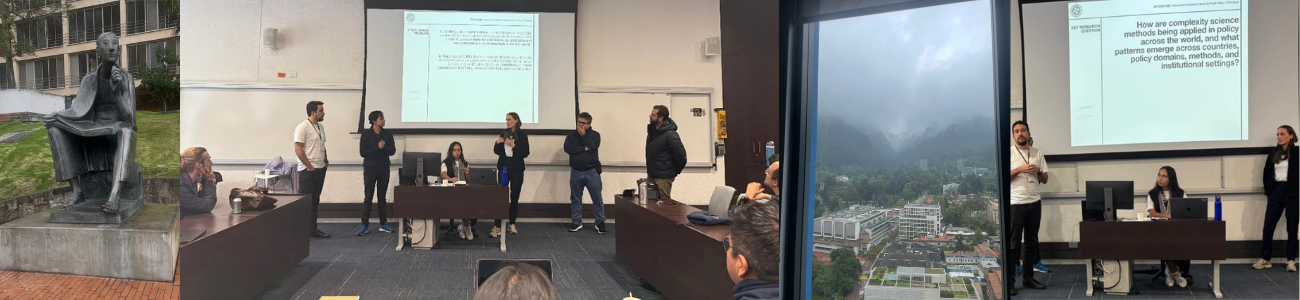
Work Hard, Play Hard, Bogotá Style: A Download on the SFI’s Complexity Global School
Earlier this month, Georgia Meyer, a PhD candidate in Information Systems and Innovation at the Department of Management at LSE, spent two weeks in Bogotá for the third edition of the Santa Fe Institute’s (SFI) Complexity Global School for emerging political economies. Here she shares her experience of the programme and encourages others who might… →
-
Linear correlation between white blood cell counts and the progression and prognosis of acute kidney injury
IntroductionWhite blood cell count, a cost-effective blood test marker, is used extensively for the diagnosis and prognosis of diseases. Nevertheless, its association with the progression and prognosis of acute kidney injury remains unclear.MethodsA retrospective analysis was conducted using data from a multicenter randomized trial on an acute kidney injury early warning system. Univariate analysis, multivariate… →

-
Chunking vs. Tokenization: Key Differences in AI Text Processing
«`html Chunking vs. Tokenization: Key Differences in AI Text Processing Table of Contents Introduction What is Tokenization? What is Chunking? The Key Differences That Matter Why This Matters for Real Applications Where You’ll Use Each Approach Current Best Practices (What Actually Works) Summary Introduction When you’re working with AI and natural language processing, you will… →
-
A Coding Guide to Building a Brain-Inspired Hierarchical Reasoning AI Agent with Hugging Face Models
«`html A Coding Guide to Building a Brain-Inspired Hierarchical Reasoning AI Agent with Hugging Face Models This tutorial aims to recreate the essence of the Hierarchical Reasoning Model (HRM) using a free Hugging Face model that operates locally. We will design a lightweight yet structured reasoning agent. By breaking problems into subgoals, solving them with… →
-
THE IMPACT OF HYALURONIC ACID ON GINGIVITIS AND PERIODONTAL HEALTH
Gingivitis is a reversible inflammatory condition of the gingival tissues, primarily initiated by microbial plaque accumulation. The present study aimed to assess the therapeutic efficacy of 1% hyaluronic acid (HA) gel as an adjuvant remedy to standard scaling and polishing procedures (SPP) in the management of gingivitis. Twenty systemically healthy adults diagnosed with gingivitis were… →

-
Study on the efficacy of combination therapy with rifaximin and Saccharomyces boulardii CNCM I-745 in patients with small intestinal bacterial overgrowth associated with long-term use of proton pump inhibitors
CONCLUSION: This prospective comparative study demonstrates that combination therapy with rifaximin and Saccharomyces boulardii CNCM I-745 appears more effective than rifaximin monotherapy for SIBO eradication, symptom regression, and QoL improvement in patients with PPI-associated SIBO. →

-
The high-dose dual therapy for eradication of Helicobacter pylori: efficacy and safety
CONCLUSION: The efficacy of the Era-RebAmIPP regimen is comparable to conventional triple therapy with bismuth. To assess the effectiveness of this regimen, larger-scale studies are required in various regions of our country. →
-
Return to normal activity after abdominal surgery: a pre-planned secondary analysis of a randomised controlled trial across seven low- and middle-income countries
CONCLUSIONS: With rising need for surgical care and non-communicable disease globally, this study highlights the groups of patients at critical need for improving return to normal activity or recovery after surgery in LMICs. Improving access and implementation of rehabilitation pathways, aligned to the World Health Organisation, may be crucial to improve financial risk protection to… →

-
Comparative evaluation of the effects of diclofenac sodium and vitamin D supplementation on symptoms in individuals with myofascial pain and vitamin D deficiency: a randomized controlled clinical trial
CONCLUSIONS: Vitamin D may serve as an alternative with anti-inflammatory and analgesic effects compared to NSAIDs. →
