AI News
Category Added in a WPeMatico Campaign
-
A Coding Guide to Unlock mem0 Memory for Anthropic Claude Bot: Enabling Context-Rich Conversations
In this tutorial, we walk you through setting up a fully functional bot in Google Colab that leverages Anthropic’s Claude model alongside mem0 for seamless memory recall. Combining LangGraph’s intuitive state-machine orchestration with mem0’s powerful vector-based memory store will empower our assistant to remember past conversations, retrieve relevant details on demand, and maintain natural continuity…
-
ZeroSearch from Alibaba Uses Reinforcement Learning and Simulated Documents to Teach LLMs Retrieval Without Real-Time Search
Large language models are now central to various applications, from coding to academic tutoring and automated assistants. However, a critical limitation persists in how these models are designed; they are trained on static datasets that become outdated over time. This creates a fundamental challenge because the language models cannot update their knowledge or validate responses…
-
Microsoft Researchers Introduce ARTIST: A Reinforcement Learning Framework That Equips LLMs with Agentic Reasoning and Dynamic Tool Use
LLMs have made impressive gains in complex reasoning, primarily through innovations in architecture, scale, and training approaches like RL. RL enhances LLMs by using reward signals to guide the model towards more effective reasoning strategies, resulting in longer and more coherent thought processes that adapt dynamically to a task’s complexity. Despite this, most RL-enhanced LLMs…
-
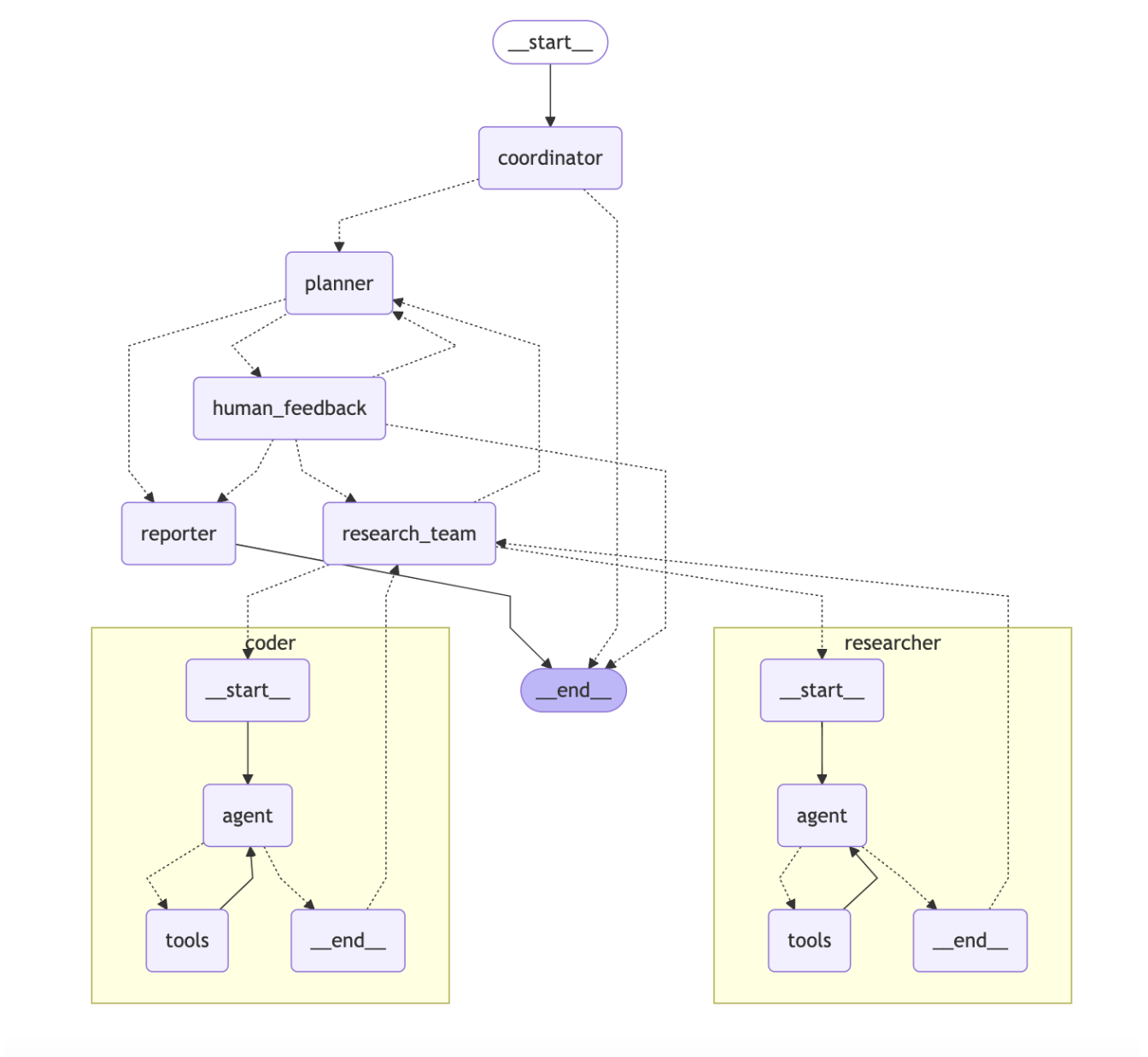
ByteDance Open-Sources DeerFlow: A Modular Multi-Agent Framework for Deep Research Automation
ByteDance has released DeerFlow, an open-source multi-agent framework designed to enhance complex research workflows by integrating the capabilities of large language models (LLMs) with domain-specific tools. Built on top of LangChain and LangGraph, DeerFlow offers a structured, extensible platform for automating sophisticated research tasks—from information retrieval to multimodal content generation—within a collaborative human-in-the-loop setting. Tackling…
-
Enterprise AI Without GPU Burn: Salesforce’s xGen-small Optimizes for Context, Cost, and Privacy
Language processing in enterprise environments faces critical challenges as business workflows increasingly depend on synthesising information from diverse sources, including internal documentation, code repositories, research reports, and real-time data streams. While recent advances in large language models have delivered impressive capabilities, this progress comes with significant downsides: skyrocketing per-request costs, constant hardware upgrade requirements, and…
-
A Deep Technical Dive into Next-Generation Interoperability Protocols: Model Context Protocol (MCP), Agent Communication Protocol (ACP), Agent-to-Agent Protocol (A2A), and Agent Network Protocol (ANP)
As autonomous systems increasingly rely on large language models (LLMs) for reasoning, planning, and action execution, a critical bottleneck has emerged, not in capability but in communication. While LLM agents can parse instructions and call tools, their ability to interoperate with one another in scalable, secure, and modular ways remains deeply constrained. Vendor-specific APIs, ad…
-

Best Practices for Building the AI Development Platform in Government
By John P. Desmond, AI Trends Editor The AI stack defined by Carnegie Mellon University is fundamental to the approach being taken by the US Army for its AI development platform efforts, according to Isaac Faber, Chief Data Scientist at the US Army AI Integration Center, speaking at the AI World Government event held in-person and virtually…
-

Advance Trustworthy AI and ML, and Identify Best Practices for Scaling AI
By John P. Desmond, AI Trends Editor Advancing trustworthy AI and machine learning to mitigate agency risk is a priority for the US Department of Energy (DOE), and identifying best practices for implementing AI at scale is a priority for the US General Services Administration (GSA). That’s what attendees learned in two sessions at the AI…
-

Promise and Perils of Using AI for Hiring: Guard Against Data Bias
By AI Trends Staff While AI in hiring is now widely used for writing job descriptions, screening candidates, and automating interviews, it poses a risk of wide discrimination if not implemented carefully. Keith Sonderling, Commissioner, US Equal Opportunity Commission That was the message from Keith Sonderling, Commissioner with the US Equal Opportunity Commision, speaking at the AI…
-
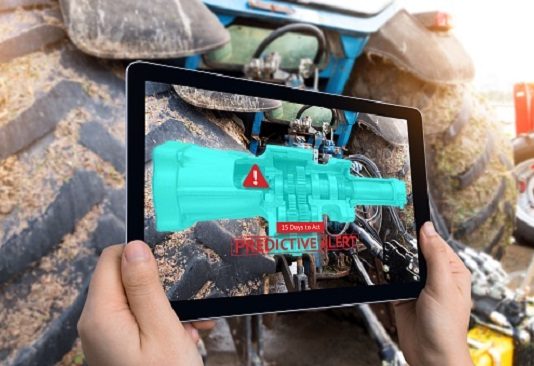
Predictive Maintenance Proving Out as Successful AI Use Case
By John P. Desmond, AI Trends Editor More companies are successfully exploiting predictive maintenance systems that combine AI and IoT sensors to collect data that anticipates breakdowns and recommends preventive action before break or machines fail, in a demonstration of an AI use case with proven value. This growth is reflected in optimistic market forecasts.…